The biggest mistake culinary professionals make when upgrading to a large-format Smartwhip system is treating every recipe with the same amount of pressure.
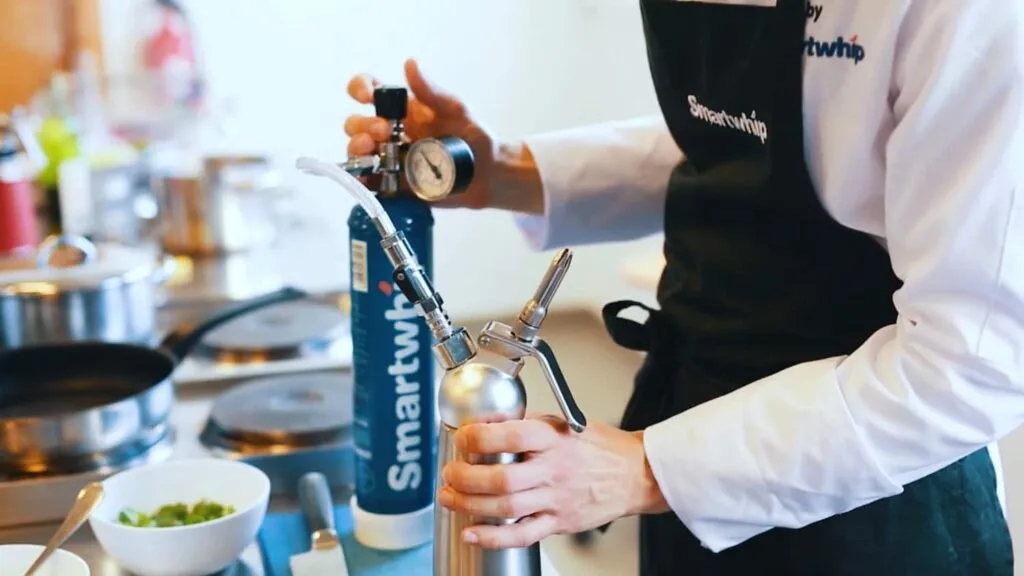
When you were using old-school 8-gram chargers, pressure control was automated—one canister equaled one charge. But when you plug a commercial stainless steel whipping siphon into a large gas cylinder via an adjustable regulator, you control the pressure dial.
If your pressure is too low, your cocktail foams will turn out watery, loose, and dissolve instantly in the glass. If your pressure is too high, you risk splitting your heavy dairy cream into butter, spraying liquid across the workstation, or blowing out the safety gaskets inside your siphon head.
To help you hit the perfect texture on every single order, we compiled the definitive Smartwhip PSI chart and reference guide for modern bars and kitchens.
The Master Smartwhip PSI & Bar Reference Chart
This benchmark matrix covers standard culinary, beverage, and mixology applications. Pin this grid to your prep station wall for quick reference during morning setups.
Step-by-Step Regulator Calibration Workflow
To ensure your pressure readings match the chart above with absolute precision, train your kitchen staff to follow this identical gas-priming sequence:
1.Zero Out the Regulator Handle:Clear the line first.
Before cracking open your cylinder valve, verify the regulator adjustment knob is spun entirely counter-clockwise to the negative (-) position. The internal needle valve must be fully closed to protect your delivery gauges from sudden pressure spikes.
2.Snap-Lock the Siphon Adapter:Secure the link.
Fill your whipping siphon with your liquid base and screw the head on firmly. Attach your high-pressure braided hose lines to the regulator, and click the quick-connect nozzle directly onto your siphon’s intake valve.
3.Open the Master Cylinder Valve:Watch the primary gauge.
Slowly twist the top valve of your Smartwhip cylinder counter-clockwise. The high-pressure tank gauge will immediately leap up to register the total remaining gas volume left inside the core cylinder.
4.Dial Up to Your Target PSI:Match the chart metrics.
Slowly turn the regulator adjustment handle clockwise. Watch the secondary delivery gauge closely. Stop turning the moment the needle rests exactly within your chosen recipe zone on the Smartwhip PSI chart (e.g., 125 PSI for premium sweet foams).